Physical AI
The same infrastructure cycle that reshaped the data center is now echoing into tens of billions of devices, machines, vehicles and robots. We expect this next wave, Physical AI, to scale faster than any technology wave before it.

Devices and machines that sense, think, act & communicate in real time
Physical AI runs on a closed loop known as STAC—Sense, Think, Act, Communicate: capturing signals from the real world, deciding locally in real time, acting with precision and exchanging data securely across distributed systems. STAC is the core architecture behind every scalable Physical AI system and maps directly to the technologies GF has been investing in for more than a decade.
Built on ultra-low-power CMOS, RF, silicon photonics, advanced packaging, embedded non-volatile memory and now MIPS and ARC real-time RISC-V processors, GF delivers an end-to-end platform for intelligent autonomous systems backed by a resilient global manufacturing footprint across the U.S., Europe and Asia.

Why Physical AI
The past decade of AI infrastructure build-out has set the stage for what’s next: pushing intelligence onto the device, where milliseconds and milliwatts matter. Physical AI enables systems to sense the physical environment, think deterministically, act with precision and communicate securely across distributed networks. This shift is driven by the need for lower latency, higher reliability and greater energy efficiency than cloud-only approaches can deliver.
As intelligence moves into devices, vehicles and robots, GF delivers the semiconductor technologies that power this new era of real-world, real-time computing.
Uniquely differentiated to support Physical AI workloads
Physical AI systems demand four capabilities that must work together at the system level: precision sensing, ultra‑low‑power compute, deterministic actuation and secure low‑latency connectivity. GF is the only manufacturing partner that brings all four capabilities together under one roof.
-
Ultra-low-power compute
Long battery life, low leakage and the right PPA for real‑time edge workloads; reliability even in harsh environments
-
RF & connectivity
RF-SOI and SiGe to move sensor data and decisions reliably across domains and networks with low latency
-
Deterministic, real-time processing
Safety‑capable, low‑latency, RISC‑V‑based compute subsystems paired with GF’s processes and global manufacturing to get to working silicon faster
-
Advanced packaging & silicon photonics
High‑bandwidth, heterogeneous integration that brings sensing, compute, memory and I/O closer together, cutting latency and power
-
Embedded memory
Fast, power‑efficient non‑volatile memory that keeps models and data local to the edge and future‑proofs designs
-
Manufacturing at scale
A trusted, expanding footprint to deliver volume resilience and state‑of‑the‑art advanced packaging for the AI era

Proven momentum where Physical AI is already taking shape
Physical AI is already transforming industries where real-time decision-making, safety and energy efficiency are non-negotiable, and where GF technology is embedded.
Automotive: From ADAS sensor fusion and radar to efficient domain controllers, combining safety‑capable, deterministic compute with robust RF connectivity for split‑second performance on the road
Robotics: Multimodal sensing, distributed intelligence and reliable actuation for humanoids and autonomous systems, delivered through ultra‑low‑power compute, fast embedded memory and advanced packaging
Healthcare: On‑device imaging and monitoring systems to process signals locally for instant response, privacy and power efficiency in constrained form factors
Next‑generation IoT: Wearables, AR/VR and smart home devices that balance responsiveness, battery life and connectivity for always‑on experiences
GF + MIPS + ARC: A holistic technology partner for Physical AI
GF and MIPS combine real‑time, event‑driven RISC‑V compute with GF’s differentiated technologies to accelerate physical AI innovation. Together, they deliver a deterministic, safety‑capable compute platform engineered for devices that must sense, think, act and communicate in real time.
MIPS brings a software‑first microarchitecture and proven multithreaded heritage ideal for physical‑world workloads, while GF provides FDX™ FD-SOI, inFET, RF‑SOI, SiGe, BCD/GaN and advanced packaging to optimize power, performance and connectivity. This pairing enables a closed‑loop intelligence stack that customers can tailor to workload, power and cost.


GF business webinar series: Enabling the evolution of edge to Physical AI
This webinar showcases how GF MIPS and CMOS technologies are driving the evolution of smart, autonomous, and connected devices from edge to physical AI applications.
Latest news & insights
-
 Learn more: GlobalFoundries announces customer availability of UX platform technologies for intelligent edge, connectivity and Physical AI applications
GlobalFoundries announces customer availability of UX platform technologies for intelligent edge, connectivity and Physical AI applications
-
Learn more: GlobalFoundries completes acquisition of Synopsys’ Processor IP Solutions Business, delivering a holistic technology platform for Physical AI
GlobalFoundries completes acquisition of Synopsys’ Processor IP Solutions Business, delivering a holistic technology platform for Physical AI
-
Learn more: Powering AI at scale: How HVDC and GaN are transforming hyperscale data centers
Powering AI at scale: How HVDC and GaN are transforming hyperscale data centers
-
Learn more: Embedding Physical AI at the RF edge for defense systems
Embedding Physical AI at the RF edge for defense systems



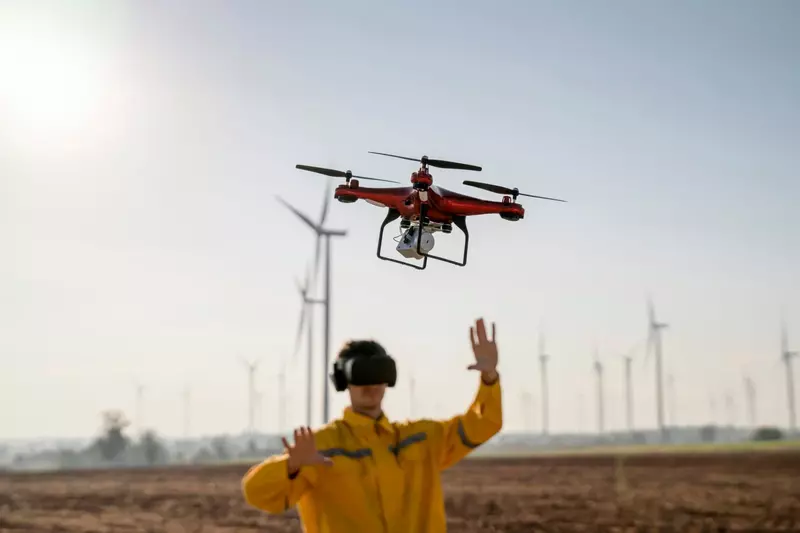
Frequently asked questions
Physical AI brings intelligence into the physical world—machines and devices that sense their environment, process information locally, make decisions and act in real time. It reduces dependence on the cloud for latency‑sensitive tasks and enables autonomy at the edge.
As applications like humanoid robotics and advanced autonomous systems move from research into real‑world deployment, demand for real‑time embedded control and energy‑efficient, on‑device intelligence is accelerating. A massive data‑center build‑out has primed the ecosystem; the next cycle pushes intelligence to billions of devices.
We provide the semiconductor foundation—ultra‑low‑power compute (FDX FD-SOI & FinFET), RF and connectivity, advanced packaging and photonics, embedded memory and deterministic real‑time compute via MIPS to build reliable, secure, low‑latency systems at scale.
Edge AI describes where computation happens, running AI models close to the data source to reduce latency and reliance on the cloud. It delivers faster processing, but its role is primarily analysis.
Physical AI goes further. It brings intelligence directly into devices and machines so they can sense their environment, make deterministic decisions, act through motors or actuators and communicate in real time. It’s a full closed-loop system built for real-world operation, not just local inference.
Edge AI is a building block of Physical AI. It provides the localized compute foundation, while Physical AI adds the capabilities needed for autonomous, real-time action in the physical world, like precision sensing, ultra‑low‑power compute, embedded memory, secure RF connectivity and reliable actuation. Physical AI doesn’t replace edge AI; it extends it into real-world impact.